THE FABRIC WORKS
Client: Spinnaker
Value: 24 million
Status: Planning
Overview:
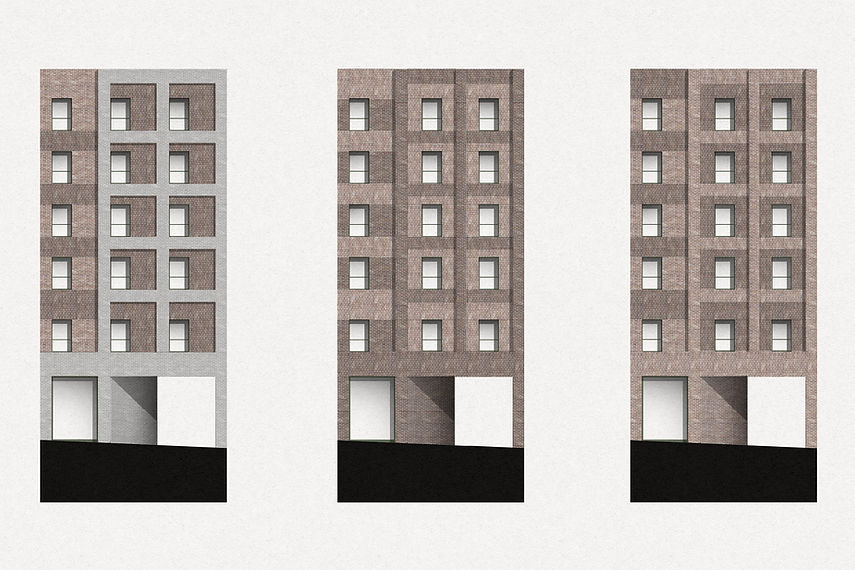
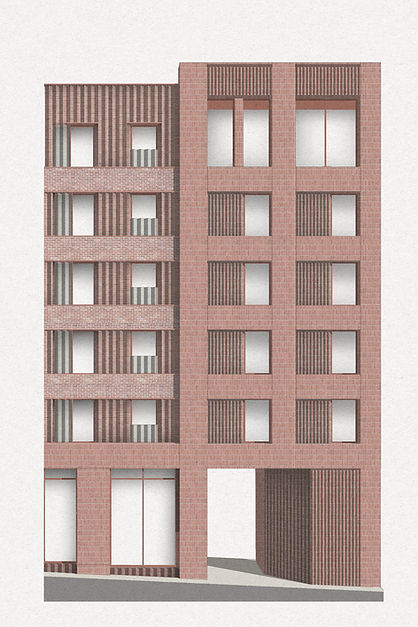
Responding to Exeter’s growing demand for student housing, the scheme delivers a six-storey, 180-unit purpose-built accommodation on the former Unit 1 nightclub site in the Grecian Quarter. The U-shaped building of 5,285 sqm encloses a landscaped central courtyard, providing a social and spatial focus, while transparent ground-floor frontages engage with Summerland Street and Verney Street. Each self-contained studio includes a bathroom and kitchenette, complemented by shared amenities such as a lounge, study areas, gym, gaming and podcast rooms, and laundry facilities. The development replaces a post-war building with a contemporary, contextually sensitive scheme that enhances the townscape and preserves key heritage views.
Community Impact & Value:
Working closely with Spinnaker Estates and the local authority, the design supports both student life and the wider urban community. The central courtyard and cycle routes link to the neighbouring Printworks development, fostering shared outdoor spaces and improved connectivity. Active street frontages, enhanced pedestrian crossings, and careful consideration of views towards St Sidwell’s Methodist Church reinforce the scheme’s civic presence. By delivering high-quality, sustainable homes close to city-centre institutions, the project contributes to long-term student retention, local economic investment, and the ongoing regeneration of the Grecian Quarter.
Technical Insights & Challenges:
The site presented a number of constraints, including level changes, adjacency to The Printworks, and conservation sensitivities. Building massing and façade articulation were carefully developed to mitigate overlooking while protecting important heritage views. As a non-high-risk building, the scheme incorporates a robust fire strategy alongside a sustainability-led design approach, with a target of net zero in operation. The roof integrates a blue biosolar system, combining photovoltaic panels with green infrastructure, and the building is designed to connect to Exeter’s emerging District Heating network. Tight programme pressures required close collaboration between architectural, engineering, and sustainability teams, supported by extensive HRB versus non-HRB viability testing.
Key Achievements:
The project delivers an efficient, site-responsive layout within the constraints of a brownfield plot, informed by a sustainability strategy embedded from the outset. A fabric-first approach supports the net zero in operation target and was developed through close collaboration with MEP, energy, and sustainability consultants. The architectural response balances the protection of heritage views with a positive contribution to the local townscape, resulting in an active, civic-facing scheme aligned with Exeter’s wider urban regeneration objectives.